Friday, January 16, 2015

WIND-WIND-WIND

WIND-WIND-WIND. Unfortunately we have to take it and take as much of it as mother nature throws at us. Wind makes waves which and when combined with sunlight sustains superior oxygen levels. Good. Stillwater fly fisher people experience numerous varieties of still water conditions. From that dark, extremely reflected "PONDY", calm as can be "sheet of glass" scenario to the polar opposite - Hard pounding winds that throw reflections of grey and spray throughout the entire day. Getting out of it sometimes consists of motoring all the way across the lake to tuck up against the far tree-line / shoreline, because the wind has skipped a mere 40 feet of that end, shooting over the trees and touching water just off shore. Just enough to anchor. WHY IS THE WIND ALWAYS BLOWING HEAD ON INTO OUR CAMPSITES? Who knows, it rarely graces us in the "overhead" direction.
When the wind is mad, its time to adjust our tactics. Those long / meticulously tied leaders ending in super light fluorocarbon tippets can be laid to rest for the day. Why? Well in my opinion, when the surface is "disturbed", so is the way light falls through the water column. Therefore, being extra sneaky or cautious may need not apply. If the only cast-able water available, is less than 4 feet - completely disregard what I just said. During these "hurricane - ish" type days, spend some extra time learning your lake's profile. Actually spend more than 30 seconds searching for bugs. Comb the bottoms of logs, sift through the bullrushes & overturn rocks. Have a look at small particles passing you, along the shoal. What particles? The disturbed particles that the waves have dug up and sent on their way. Why are they moving? because the lake has now incorporated a small breeze current. Thats right, the water is moving in a specific direction, usually affiliated with the pulse or pressure of the waves reaching shallower water. There is serious pressure on the surface of a small lake during winds greater than 25 kph. Imagine blowing on a plate with an inch of water on top. Things get pushed around and its not often observed because of the waves - surface disturbances. Whichever side of a bay or end of the lake this debris or sediment is heading, sometimes so are the fish. The problem is it's going to be right into the mess of the wind, but when its starts to calm down (normally when you just started flipping your steaks), thats when you want to be casting big obnoxious patterns or slow lower profile presentations through those "deposit zones". They host a poor visibility rating for a short amount of time, but all sorts of resident food sources have been kicked up and swept together to reside in a new section of the lake's bottom. I have always found one of two patterns work really well for me in these situations: 1) Medium sized bright red flashy buggers with gold bead heads OR LITTLE FORT LEECHES, stripped quite quickly. 2) #12 clear back pale yellow baggy shrimp (scud) patterns, slowly walking along the cloud & clear lines (normally 3 - 6 feet of water).
Lately I have chosen a different anchor position than the regular front and back drop, casting off the side of the boat. In the windy conditions greater than say 10 kph, I try to drop my anchors bow (or sometimes stern) into the wind, releasing a good amount of scope (extra rope). As the boat slowly swings along in its new 'bitten destination', I have the back anchor completely ready to deploy. Just when the boat is approaching the desired casting spot (just before), I release the stern anchor quickly down and try not to let anymore than a few extra feet. The reason being is that you don't want too much swing. Clearing the floor of obstruction (paddles, flyboxes, beer etc) is important for where your stripped line will land (as per normal).
In general, big wind storms and substantial jumps in conditions and clarity "stir the pot" so to speak. Feeding zones can change rapidly. Temperatures mix in the shallows and the normal thermocline settings can and will re-adjust. Its a good time to have a look at the lake and watch where the waves are ending up. Where the little micro currents are leading to and most of all, where you will be able to fish. Tight Tippets Brent Gill / The Douglas Lake Ranch.

Tuesday, January 13, 2015

NEW PRIVATE CAMPSITES at BIG & LITTLE SABIN LAKES!

We are proud to announce the addition of two new locations set for private camping on The Douglas Lake Ranch! Big Sabin Lake will be receiving two campsites and Little Sabin Lake will be receiving one (lake exclusive). Both of these lake have been part of our diligent stocking and management program for decades. Triploid Kamloops Rainbow trout inhabit these waters. The fishing can be fast and furious for trout 1 to 2 pounds. The regulations are: fly fishing only, barbless hooks, maximum two boats per site & only children 16 and under can retain a fish (one per day / per youth). No boats or firewood are provided at these new sites. A picnic table, outhouse and fire pit are all located at each site. Firewood will be available for purchase from The Douglas Lake Ranch.

Wednesday, December 11, 2013

2014 Fly Fishing Schools at Stoney Lake Lodge!

Interested in taking Fly Fishing on as a new hobby or sport? How about fine tuning your skills to an advanced level? This year we are offering two Fly Fishing Schools at Stoney Lake Lodge! Join the industry's best Instructors at Stoney Lake Lodge this 2014 Season: -INTRODUCTORY TO FLY FISHING STILL WATERS, MAY 30TH TO JUNE 1ST (3 DAYS / 2 EVENINGS). INSTRUCTORS: BRIAN CHAN & KATHY RUDDICK. A complete Introductory to fly fishing. Equipment, knots, leader construction, entomology, trout habits and habitat and fly casting 101 are just some of the topics covered here. Classroom, field casting instruction and on water guiding complete this school. $799 per person based on double occupancy. All meals / accommodations / lodge amenities / boats and instructor fees included.
-ADVANCED FLY FISHING STILL WATERS! JULY 3RD TO JULY 6TH (4 DAYS / 3 EVENINGS). INSTRUCTORS: PHIL ROWLEY & BRIAN CHAN. Serious Stillwater tactics / theory and on water guiding and Instruction. This is a non-beginner four day school that Phil and Brian are very excited about. ADVANCED: Line, leader and tippet discussions / instruction. A full spectrum of fly lines and characteristics versus conditions / environment. ADVANCED patterns, casting, turning over long leader / indicator set ups, floating wet flies, dry fly presentations and tippet configurations. This school is geared for much more "on water guiding / instruction and discussion" than most of anything available. $949 per person. All meals / accommodations / lodge amenities / boats and instructor fees included.
VIDEO LINK: http://youtu.be/jUx1Ad7K3Ag

Saturday, August 10, 2013

SUMMER FISHING REPORT!

Well, as per normal the fishing during the last few weeks has slowed down somewhat. Salmon Lake, Stoney Lake, Minnie Lake and The Sabins are all starting to warm right up and push fish deeper. Wasley and Mellin remain fairly strong due to their higher elevations. Harry's Dam seems to fish well in the summer due to the location and sun exposure. Locating fish with faster sinking lines is the key right now. I prefer a type 6 sinking line, available from all of the local flyshops and outfitters. Making sure that your presentations are off the deep end of the drop-offs and close to the bottom is a must. Because the lakes become "stratified" due to temperatures and oxygen, being to shallow can be a problem as they rarely break from their holding depths during normal daylight hours. Big leeches in reds / blacks / marroons and browns are great summer fly. Scud patterns with bead heads search that same zone with usual success. The chance for some decent dry fly or surface action can occur in the summer months as well. It's usually right before dark on the larger shoals of the lake. If you are heading up our way and wish to share your fishing experience, please do so by email at stoney@douglaslake.com or salmon@douglaslake.com TIGHT TIPPETS! Brent Gill.

Saturday, May 18, 2013

Mid May Fly Fishing Report

After a longer than normal turn-over after an early ice-off, things are really starting to pick up on our lakes.

SALMON LAKE - Excellent Chironomid fishing at both northern and Southern ends of the lake. Fishing depths from strike indicators 6 to 12 feet. Popular picks of Chironomids: Static bags, black and reds, maroons, gold wire variations in sizes 12 and 14, with the odd 16's around. The normal searching patterns of Pumpkin Heads, K-Mart specials, Black Leeched, Marroon leeches and olive Wooly Buggers have all produced some nice fish. Anglerss with good patience have capitalized on good scud (shrimp) fishing as well.

PAY LAKES - Both Little Sabin and Big Sabin started off with a bang early on. Lots of Chironomids emerging on these waters. Harry's Dam is fishing exceptionally well for fish of all sizes. The word out of Pikes lake was slow trout fishing, possibly a big population of Suckers. We will confirm this as we get a chance to document the lake in the upcoming days. Little Chapperon has had some success, yet minimal angler visits. We are still awaiting detailed reports from Wasley and Mellin, as the first anglers are set to arrive as I write this.

STONEY LAKE - Great Chironomid fishing in waters 8 to14 feet deep, mostly on the Southern portions of the lake. Static bags and blacks and blood colours have been the ticket in sizes 12 and 14. Fast retrieving big leeches along the shoals and darker water has proved deadly effective the last few days. Incredible amounts of extra large scuds are mating throughout the entire lake, creating extra plump trout.

MINNIE LAKE - Excellent Chironomid fishing on most parts of the lake, with the same above mentioned patterns.

Thursday, March 28, 2013

An INSIDE Look at SALMON LAKE CABINS!


Here's a good look at the inside of one & two bedroom cabins at Salmon Lake Resort! The Resort has a fine mix of one and two bedroom cabins, with a variety of bed configurations. Ideally, most of the cabins can accommodate up to four people. Some of the cabins also have queen beds.
 The one bedroom units have a fold-out style sofa in the front living room space, incorporating a bigger common area. The two bedroom units have a smaller common area but have more beds and separated sleeping quarters. We are pretty confident to say that there is something for everybody!

                                                The Outside porch of a two bedroom cabin.

                                               The dining area of a two bedroom cabin.

                                              The outfitted kitchen of a two bedroom cabin.
                                                 The washroom of a two bedroom cabin.
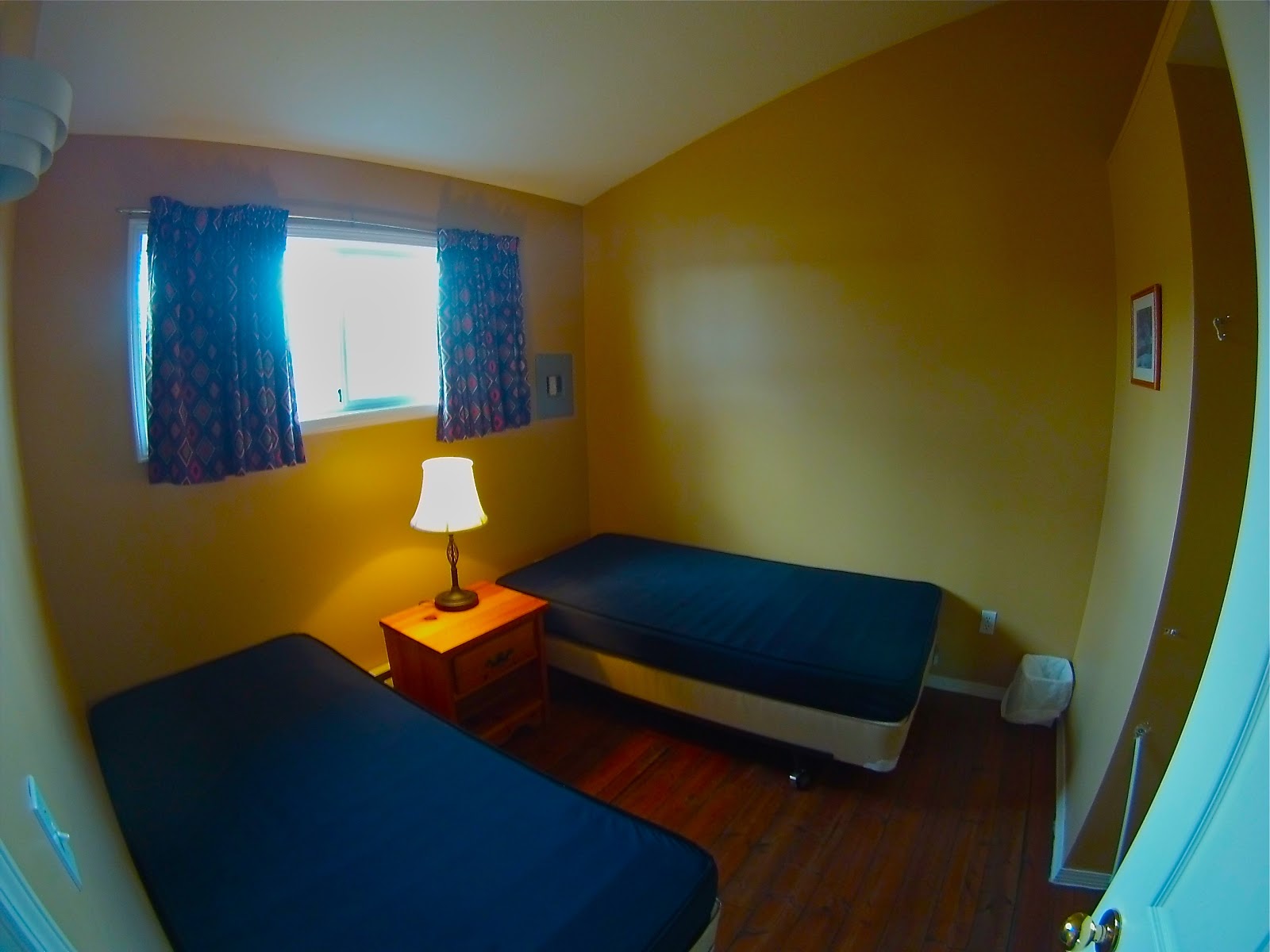
                                                A typical bedroom of a two bedroom cabin.

                                           Another typical bedroom of a two bedroom cabin.
                                           The common are of a typical one bedroom cabin.

                                            The outfitted kitchen of a one bedroom cabin.
                                              A typical washroom of a one bedroom cabin.      
                                                 A typical one bedroom cabin with a queen.

Monday, March 25, 2013

SINKING LINES / BIG FLIES


Here is a short video showing some of the advantages of being prepared with a few different sinking lines during the warmer months of the still water season. Sinking lines can be utilized throughout the entire season to search low lying fish, just off the bottom. Most individuals that choose to troll flies for Trout in lakes will find sinking lines to their advantage. For superior casting / searching methods, all the normal types of sinking lines will work very favorably from anchoring in shallow waters and casting and retrieving to deep drop off / darker water zones.

The higher the number of the "type" of sinking line, the faster the sink rate. Type 1 is intermediate (very slow, best purchased in clear). Type 3 is medium sink (most low end generic sinking lines are type 3 although high end lines are available) colours may be dark green, dark blue, brown or black. Type 6 or 7 (extra fast sinking, normally black) mostly produced in better series of fly lines.